Dressing for Winter Running Success

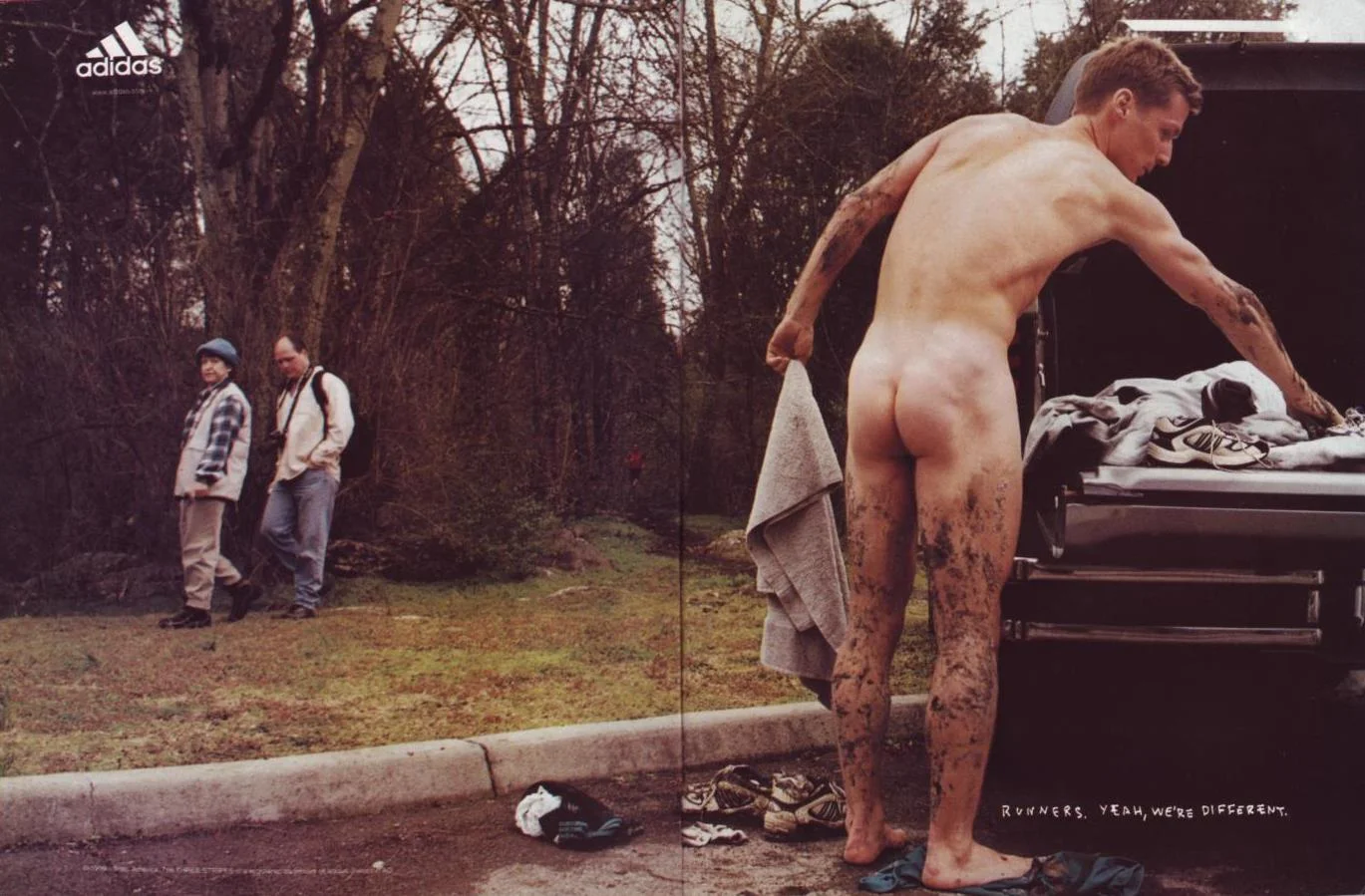
Adidas ad campaign 1999-2000 courtesy of http://www.chayden.net/Runs/Adidas/

Adidas ad campaign 1999-2000 courtesy of http://www.chayden.net/Runs/Adidas/

Don't get caught bare naked in the cold! For winter running in Kansas you need layers of water wicking, water resistant, wind breaking materials. In the cold, blood rushes away from your extremities to protect your vital organs so you must protect your fingers and toes! Keep in mind visibility - choose reflective and brightly colored materials.

Winter running gear by body part:

Head and Face

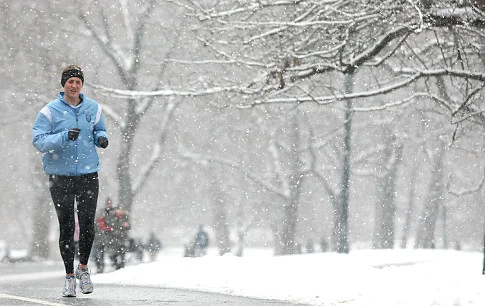
Trap in heat with a beanie and protect ears from frostbite with ear warmers. A fleece neck warmer is a must. And when the freezing wind is all up in your face, try a balaklava underneath your beanie and neck warmer.

Trunk and arms

Wear multiple breathable layers with the innermost layers water wicking and the outer one wind and water resistant. A vest over the top is a great way to keep core temperature up, plus they look good and usually have handy pockets! 

Hands

Wear two layers with the outer layer in a wind and water resistant mitten as opposed to gloves. Add hand warmers when it is really cold. As soon as you open the package they start working so don't open them up the night before! I store some in the glove compartment of my car. 

Legs

Keep leg muscles warm with running tights but unless you are stuck in the 80's keep the running shorts in your drawer. For added protection, wear compression shorts underneath those tights. Fleece lined tights are too hot for me no matter the temperature but many runners swear by them. 

Feet

Wear slightly thicker run socks than you usually wear. Avoid socks that are bulky and don't double up as you will find your shoes are suddenly too tight and that is a no-no. In the event of snow, try yak tracks over your shoes. 

If the windchill is below zero or ice is on the ground, running gear won't be enough. Skip the out of doors and cross train or run indoors. 

RRKC is not affiliated with a brand, but Coach Amy has had personal success with Nike tights, Saucony gloves, Brooks and Adidas jackets/vests and Under Armour's water wicking primary layers and face/neck/head gear.

Happy Winter Running! 
RRKC December Membership and Long Term Membership

It's time to sign up for RRKC December! Membership includes three Saturday group runs AND Run Lit. We hope you can join us. December members are welcome to bring friends and family to Run Lit.  Go to EVENTS for more details. 

Also...you've asked so we are researching automatic payment for monthly membership so you do not have to keep signing up every month. Our goal is to have this ready by January. Stay tuned!

$h!t Happens

Adidas ad campaign from 1999-2000

Adidas ad campaign from 1999-2000

Runner's trots...it's an unfortunate occurrence common to running; one that can be humiliating in less you have a great sense of humor. I'm actually quite thankful for the wooded trail today and my training partner who graciously ran ahead 100 yards and stayed put! 

Here are a few tactics you can try to prevent runner’s trots per Dr. Schnoll-Sussman cited in a recent article from Women's Running, The Underlying Reason Some Runners Get Runner’s Trots BY FARA ROSENZWEIG    PUBLISHED FEB. 15, 2016   UPDATED MAY. 16, 2016

  • Limit the intake of high-fiber foods at least two days before a long race or training run.
  • Avoid/limit artificial sweeteners such as sucralose, dairy products or any foods known to cause loose stools or flatulence for several days prior to the race.
  • Hydrate, hydrate, hydrate. Aim for a very light yellow urine color.
  • Try to avoid eating at least two hours prior to exercise. This will allow for enough time for food to empty your stomach.
  • If you do not need the caffeine stimulation, try to avoid the intake of caffeinated products and warm fluids close to race time.
  • If you use gels during races, these may be the culprits. Practice different formulations.
  • NEVER try something new (foods, gels, water supplements) on race day.
  • Although one should not use these on a daily basis, for races or special events consider trying an over-the-counter antidiarrheal agent such as Imodium.
  • Consider getting a consultation with a nutritionist who specializes in the care of athletes. They can carefully review your personal diet and make specific recommendations and modifications.