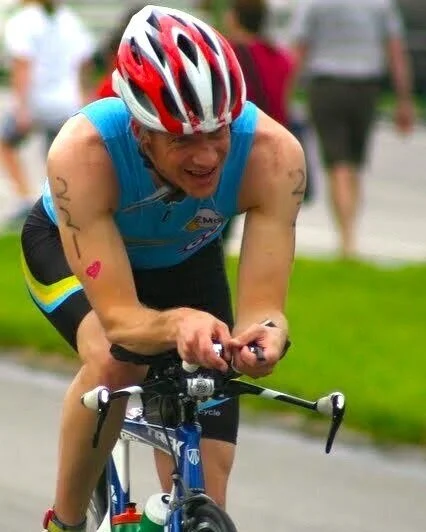
Our Winner Jessica Watkins Conquered Injury to Complete 100 Mile Ultra Marathon!

Jessica+Watkins.jpg

Thank you to all of our patients who entered the #igotmyfixcapt competition during October and November on social media. We were inspired by each and every story filled with strong willed spirits and amazing feats! The common thread through each testimony was that by fighting to overcome limitations and injuries, each and every person grew stronger, faster, tougher, and better. Our winner of the Scheels gift card and this year’s “title” is Jesica Watkins. We share her story:

“In 2016 I pulled my hamstring but the stubborn runner in me ignored the injury and continued on training and running, only causing other problems that I wasn't aware of yet. In 2017, a year later, I decided it was time to heal the injury and I went to 2 physical therapists and 1 chiropractor trying to figure out what was wrong and how to fix it. Nothing they did helped me. I finally found Coach Amy somehow while searching online, and thought that I would give it a try. Within the first 5 minutes of seeing her, I had hope. She said "Oh I know exactly what this is and how to fix it!” I was ready to do anything and everything she told me to do to get better, including stopping running.

I followed her plan to a ‘T’ and within just two weeks of seeing her I was already noticing a difference. I was ecstatic! Months of hard work later, we started to gradually build into running. About 5 months into seeing her, I ran a half marathon followed by a full marathon a few weeks after that PAIN FREE! It was amazing. Fast forward to now, I just completed my first 100 mile ultra marathon, injury free. I have remained injury free since the day I started seeing her. She is so full of knowledge and experience. I can wholeheartedly recommend anyone and everyone looking for a physical therapist to see Coach Amy because she will help you if you just follow the plan! I can't thank you enough, Amy!” #igotmyfixcapt

Our 2019 schedule is full. January slots will open starting Dec. 6th.

Running While Sick, When You're Not Sick of Running!

sick.jpg

One day last Fall, I knew I was getting sick. I had body aches all over and pushed through the work day. And I'm ashamed to admit, I rushed home to squeeze in a quick 3-mile run before I got "too sick." This was not a smart move. That night I was wrapped in chills and body aches which progressed to an illness that lasted over a week.

Stress, whether it's emotional or physical, can prolong an illness or injury. Our very own, Dr. Jeff Waters, weighs in on the topic, "Running when ill does produces stress to your body. If you’re already cranking out immune cells, antibodies, and cortisol to get rid of some pesky germ and you already have a fever, you will not be able to accommodate the buildup of core body temperature while exercising. You put yourself at risk for heat related illness and are impairing your body’s immune reactions."

So what do we do about training when we get sick? Do we keep training, modify or rest? I know you love this answer, but...it depends.

Here is a "rule of thumb”:

If your symptoms are neck and up: headache, sore throat, sniffles, sneezing...then it's OK to run. But listen to your body. If you have significant fatigue with these symptoms then you may want to modify your distance and speed or intensity. Rest, hydrate and properly recover between workouts.

If the above symptoms are accompanied with a fever, nausea or you have any symptoms below the neck like chest congestion, a severe cough, or vomiting then you should NOT run. Take the week to stay hydrated, rest, get at least 8 hours of sleep a night, and practice good nutrition.

If you have severe symptoms like chest pain, breathing problems, an extremely high fever, or a fever that lasts more than a couple days, then you need to take a trip to the doc!

Depending on the severity of your illness, a walk may be a good alternative. Again, listen to your body. You probably aren't going to feel like walking with a 101 degree fever and a nasty, bronchial cough. But once the fever subsides and you start to regain a little bit of energy, a walk is a good thing! In the cold, wear a light layer over your mouth - like a bandanna, neck gator, or equivalent to add humidity and keep the cold out that constricts the airways a bit.

If you tolerate a walk, try a shorter distance run at an easy pace and see how you feel. If that goes well, then you can resume your training plan distances with easy effort. For your first long run back, I suggest cutting the out and back distance in half and doing it twice if you feel good. If it doesn't go well, you won't be stuck far from home base.  If you stopped training for more than two weeks then you might need some coaching advice to get you back on track.

Don't try to go back and "make up" what you didn't do while you were sick. If you have any questions about returning to your running plan after illness, contact Coach Amy. I’m happy to help modify your schedule to keep you on target for your goals.

The best way to keep yourself on the road and out of your sick bed is to wash your hands, eat well, get adequate sleep/rest, do not kiss your barfing spouse, and when someone is coughing near you without covering their mouth, hold your breath and run away (don't forget to give them a nasty look).

Listen to your body during cold and flu season, be kind to it and run happy!

Check out our November Running Events

Bundle Up, It’s Cold Outside!

Cold+Running+Gear.jpg

All of a sudden, it’s freaking cold out! It’s tempting to run indoors on the treadmill this time of year, but Coach Amy recommends running outdoors unless conditions are icy or the “feels like” temperature is below 0 degrees taking into account the wind chill. Stepping out the door and running the first mile in really cold temps is tough, but if you are dressed properly you will feel much better once you’ve warmed up.

Dressing properly makes running outdoors in the winter safer and more tolerable. The key is to layer with water wicking, water resistant, wind breaking materials. Keep in mind visibility - choose reflective and brightly colored materials.

Here are some recommendations:

Head and Face: Trap in heat with a beanie and protect ears from frostbite with ear warmers. A fleece neck warmer is a must. And when the freezing wind is all up in your face, try a baklava underneath your beanie and neck warmer.

Trunk and arms: Wear multiple breathable layers with the innermost layers water wicking and the outer one wind and water resistant. A vest over the top is a great way to keep core temperature up, plus they usually have handy pockets! 

Hands: In the cold, blood rushes away from your extremities to protect your vital organs so you must protect your fingers and toes! Wear two layers with the outer layer in a wind and water resistant mitten as opposed to gloves. Add hand warmers when it is really cold. As soon as you open the package they start working so don't open them up the night before! I store some in the glove compartment of my car. 

Feet: Wear slightly thicker run socks than you usually wear. Avoid socks that are bulky and don't double up as you will find your shoes are suddenly too tight and that is a no-no. In the event of snow, try yak tracks over your shoes. 

Legs: Keep leg muscles warm with running tights. For added protection, wear compression shorts underneath those tights. Fleece lined tights are too hot for me no matter the temperature, but many runners swear by them. 

Embrace the cold people. You CAN do it!

Share Cold Weather Running Tips with our friends on Facebook

What You Really Need to Run

Stair+Running2.jpg

What do you really need to run? According to Guillermo Pineda Morales, a.k.a. Memo, all you need is two things: hard work and never giving up. Memo is one of the top 10 runners in the world in his age group. In preparation for last weekend’s New York Marathon, the New York Times featured his inspirational story and training method. The video is a must watch!

https://www.nytimes.com/2019/11/01/opinion/memo-nyc-marathon.html

The video announcer says, “You know what Memo really believes in? Memo believes in running." I think it goes beyond that. I think he believes in himself. That’s the most powerful belief you can hold. 

I agree with Memo. It all comes down to hard work and never giving up. Memo can train and perform with a minimalist approach but some runners may need a little more guidance. Some of us need the support, accountability and motivation that comes from the metrics of our smart watches, a coach, a training plan, running buddies, group runs, and posting on social media. No matter what it is you need, believe in yourself, do the work and never give up!  

Train with Roadrunners of Kansas City
Learn More About Personalized Coaching

Completing the Trifecta to Pain-Free Function and Injury Prevention: Proprioception

Balance and Coordination.JPG

Welcome to the third installment of our trifecta to pain-free function and injury prevention! While there are many components to injury prevention and healthy movement, our trifecta covers mobility, stability, and, in this installment, proprioception.

Proprioception incorporates agility, balance, and coordination.

You know about the five senses: hearing, taste, sight, touch and smell. Proprioception is your sixth sense. It is your unconscious and conscious ability to know where a given body part is in space. For example, if you close your eyes and your friend moves your thumb, you can report, without looking, that it is pointed up or down, left or right.

Your sense of proprioception provides approximately 70% of your ability to react to your environment. That's a lot more than the mere 10% provided by sight and 20% provided by hearing! Your muscles and joints relay information to your brain. Your brain uses that information to decide what action to take and relays it to your muscles and joints.

Pie Chart.png

If the proprioceptive system is damaged or out of practice, connections are disrupted. Your muscles can’t fire at the right time to make use of the strength, even with you have strong muscles around your joints. This can lead to poor balance, lack of coordination and decreased agility. These deficits can cause and/or contribute to injury and negatively affect sports performance.

Proprioception can be disrupted with injury, surgery and declines with age. We all depend upon this sense operating at capacity for daily activities such as using stairs, standing and putting on shoes and socks. We require it for work-related functions, hobbies, and sports. Imagine a quarterback with a recent knee injury that has disrupted proprioception. If his brain cannot interpret which direction the knee is moving and adjust, he is at risk for injury when trying to pivot on one foot to throw the ball.

The great thing about proprioception and balance is that we can restore it! I use a combination of progressively challenging dynamic and functional exercises that stimulate the proprioceptive system. I balance proven exercises with exercises that I create and personalize to each unique patient and case. In some cases, neurological dry needling is helpful to facilitate the function of the proprioceptive pathway.

About Physical Therapy. Physical Therapy addresses function in daily lives, whether it’s our ability to unload the dishwasher, walk without a limp, or run an ultra marathon. Physical therapists work not only with injured patients but also preemptively with patients to prevent injury. This can prevent long periods of pain and time off of sports and work. Periodic PT visits focusing on prevention save time and money on the higher frequency therapy appointments required with chronic injuries.

Schedule Appointment

Stability: Another Key to Pain-Free Function and Injury Prevention

IMG_0615.jpg

Just because we can, doesn’t mean we should! We may have the ability to lift the laundry basket and carry it up a flight of stairs or run ten miles, but without proper body mechanics and stability, injury can ensue.

Prevention and rehabilitation from injury involve addressing mobility, strength, and balance. We discussed mobility last week. Achieving proper mobility of the tissues doesn’t ensure safety. In fact, some people have too much mobility but can’t support the joints or get power from their muscles. This causes them to compensate elsewhere and/or fail to support the joints. This is when injury can occur.

Let’s use another rubber band analogy. Imagine shooting an older rubber band that is super stretched out, maybe even saggy or brittle. When we pull back on it, the band stretches only a bit. The rubber band has lost power and elasticity, and it will not fly very far. Its mobility is useless because it lacks integrity.

In our mobility article we discussed how people who sit for long periods of time at desk jobs, lose mobility in key muscles on the front of the body with sitting. The opposite is true for the muscles on the backside of the body, namely the glutes (bum muscles). If poor posture is involved, the muscles of the back and the front of the neck elongate as well. These muscles are like the rubber band: they become too long and weak. As a result, they do not provide adequate support (stability) during activities like walking with the dog, kicking the ball with the kids, and playing sports. This is when injury is possible.

Many activities that involve holding a position for a long time can cause muscle imbalance and reduced stability. For example:

  • Wearing high heels often or for an extended period of time. This creates a long term stretch for the muscles at the bottom of the foot and front of the hip. These lengthened muscles weaken when engaging in activities like walking the dog, running, climbing steps, and attending exercise classes. Injuries such as pain in the lower back or the bottom of the foot can surface.

  • Participating in triathlons, as mentioned in our mobility article. Being in aero position for 100 miles stretches the back muscles and glutes for hours. These lengthened muscles are needed to support the back, and for power with push off for the 26.2 mile run segment.

  • Patients recovering from abdominal surgery, such as a cesarean section. It takes time for abdominal muscles and tissues to heal from surgery. Gradual strengthening is required. These weakened muscles cannot support the spine adequately for activities of daily living, including bathing and lifting the baby, or even walking. Injury of the back and hips can occur.

One of the first things I assess when evaluating a patient is how they move. I look for faulty movement patterns that could cause injury or worsen a current injury. Poor mobility or lack of stability (or both) may contribute to the problem. I attack a lack of stability with progressively challenging dynamic and functional exercises within the patient’s tolerance. I like to use a combination of proven exercises, with exercises that I create and personalize to each unique patient and case. When pain is contributing to weakness, neurological dry needling can be helpful. Active Release Technique may also be used to treat injured joints and ligaments that result from lack of stability.

Faulty movement patterns can also be the result of poor proprioception and balance. Stay tuned for more on that in our next post!

About Physical Therapy. Physical Therapy addresses function in daily lives whether it’s our ability to unload the dishwasher, walk without a limp, or run an ultra marathon. Physical therapists work not only with injured patients but also preemptively with patients to prevent injury. This can prevent long periods of pain and time off of sports and work. Periodic PT visits focusing on prevention save time and money on the higher frequency therapy appointments required with chronic injury.

Schedule Appointment